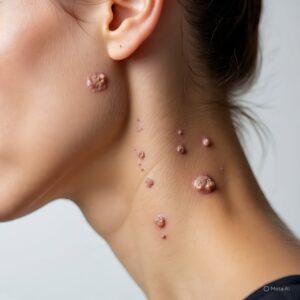
Laser Warts and Skin Tags Removal
Understanding Warts and Skin Tags
Warts and skin tags are both common, benign skin growths that can be unsightly and embarrassing.
However, they have different causes and characteristics. Warts are caused by the human papillomavirus (HPV)
and are highly contagious, while skin tags are caused by friction and are not contagious.
Laser Removal for Warts and Skin Tags
Our laser warts and skin tags removal treatment uses a concentrated beam of light to destroy the wart or skin tag tissue.
The laser energy heats and vaporizes the tissue, while also sealing the blood vessels that supply it.
This cuts off the tissue’s blood supply, causing it to die and fall off.
Benefits of Laser Removal
- Precise: Lasers can target wart and skin tag tissue with high accuracy, minimizing damage to surrounding healthy skin.
- Effective: Laser removal can be successful for stubborn warts and skin tags that have not responded to other treatments.
- Minimal Scarring: When performed correctly, laser removal leaves minimal to no scarring.
What to Expect During and After the Procedure
- Before: A local anesthetic, such as a numbing cream or lidocaine injection, is applied to the area to minimize discomfort during the procedure.
- During: A dermatologist uses a handheld device to direct the laser at the wart or skin tag. Depending on the size and type, the procedure may take less than 30 minutes.
- After: Patients may experience mild discomfort, redness, and swelling in the treated area for a few days. A blister may form, which will scab and fall off as the skin heals.
Types of Lasers Used
- Pulsed Dye Laser (PDL): Targets blood vessels that feed the wart or skin tag.
- Carbon Dioxide (CO2) Laser: Vaporizes wart or skin tag cells.
- Nd:YAG Laser: Targets blood vessels, causing them to coagulate and die.
Other Wart and Skin Tag Removal Options
- Topical Treatments: Applying salicylic acid preparations to break down the wart tissue.
- Cryotherapy: Freezing the wart with liquid nitrogen to destroy the tissue.
- Electrosurgery and Curettage: Burning the wart with an electric current and then scraping it away.
- Immunotherapy: Triggering the body’s immune system to attack the wart-causing virus.
Consult a Dermatologist
It’s essential to consult a dermatologist to determine the most appropriate treatment for your specific type of wart or skin tag.
Our experienced dermatologists will work with you to develop a personalized treatment plan.
How it Works
Preparation and Softening:
The wart is typically soaked in warm water to soften the hard, dead skin layers. This step aids penetration of topical treatments and makes debridement (filing down the dead tissue) easier.
Destruction of Tissue:
A method is applied to target and destroy the wart tissue.
- Chemical/Peeling: Medications, such as salicylic acid, are applied to the wart, which gradually strips away layers of the infected skin.
- Freezing (Cryotherapy): Liquid nitrogen is applied to the wart, freezing and killing the cells, causing a blister to form underneath.
- Physical Removal: In-office procedures like electrosurgery (burning) or curettage (scraping) physically remove the wart tissue.
Removal of Dead Tissue:
After the tissue is destroyed (e.g., after a few days with freezing, or daily with salicylic acid), the dead layers are filed away with a disposable emery board or pumice stone.
Healing and Recurrence Prevention:
The area heals, and the process may be repeated over several weeks or months until the wart is completely gone. Continued treatment or follow-up is often necessary to ensure all viral particles are gone and prevent the wart from returning.


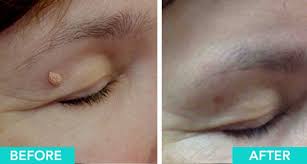
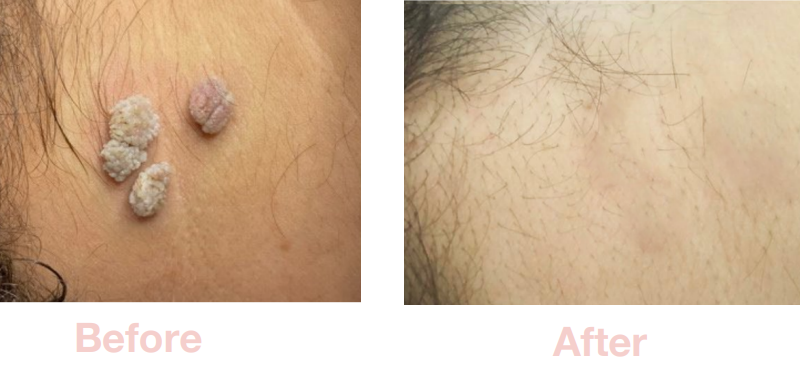
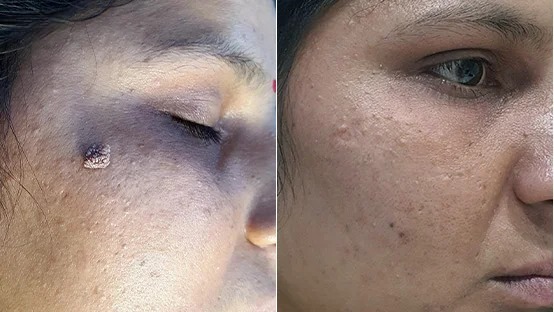
have a question?
Quick answers to questions you may have
Will warts go away on their own?
Are warts contagious?
Does wart removal leave a scar?
When should I see a doctor instead of using at-home treatments?
- Home treatments have not worked after several weeks or months.
- The wart is painful, bleeding, changes in appearance, or is located on a sensitive area like the face or genitals.
- You have diabetes, poor circulation, or an impaired immune system, as self-treatment can be risky.