The Ultimate Guide to Ear Piercing: Types, Procedure, and Aftercare
Ear piercing is a popular form of body modification that has deep cultural roots and diverse style options. Whether you’re looking to get your ears pierced for the first time or you’re a seasoned piercing enthusiast, it’s essential to understand the different types of ear piercings, the procedure, and the aftercare required to ensure a safe and healthy healing process.
Types of Ear Piercings
- Lobe Piercing: The most common and least painful, located on the fleshy bottom part of the ear. Healing typically takes 6 to 8 weeks.
- Helix/Forward Helix Piercing: Located on the upper outer or inner rim of the ear cartilage. Pain is moderate, and healing can take 3 to 12 months.
- Tragus Piercing: On the small flap of cartilage in front of the ear canal. This area is thicker, and healing may take 6 to 12 months.
- Conch Piercing: In the inner or outer cup of the ear cartilage. It has moderate pain and heals in about 3 to 9 months.
- Rook/Daith Piercing: Located in the inner folds of the cartilage, known for potentially helping with migraines for some people. These tend to be more painful and take 6 to 12 months to heal.
- Industrial Piercing: This involves two separate cartilage piercings connected by a single, straight barbell.
Procedure and Safety
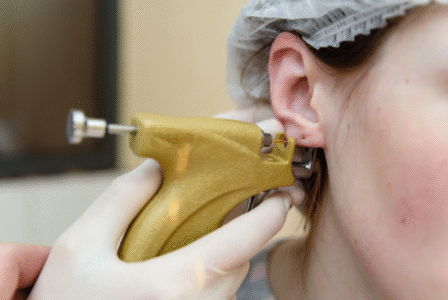
When getting your ears pierced, it’s crucial to choose a reputable and professional piercer who uses sterile equipment and follows proper hygiene practices. Here’s what you can expect:
- A sterile hollow needle will be used to create the piercing.
- The piercer will wear disposable gloves and use single-use, sterilized equipment.
- The piercer will provide aftercare instructions and recommend high-quality jewelry.
Aftercare and Healing
Proper aftercare is essential for preventing infection and ensuring good healing. Here are some tips:
- Cleanliness: Wash your hands before touching the piercing. Clean the front and back of the piercing two to three times a day using a sterile saline solution or a gentle, fragrance-free soap and water.
- Avoid Touching: Only touch the piercing when cleaning it. Avoid twisting or turning the jewelry unnecessarily, as this can irritate the wound.
- Jewelry Material: Choose high-quality, hypoallergenic metals like surgical steel, titanium, niobium, or 14K to 18K solid gold to minimize the risk of allergic reactions.
- General Precautions: Avoid swimming in pools or hot tubs, and keep hair products or makeup away from the piercing site during the healing process. Sleep on a clean pillowcase to protect the area.
How it Works
Preparation and Marking:
The area to be pierced is cleaned with an antiseptic, and the exact spot is marked to ensure correct placement.
Creation of the Channel
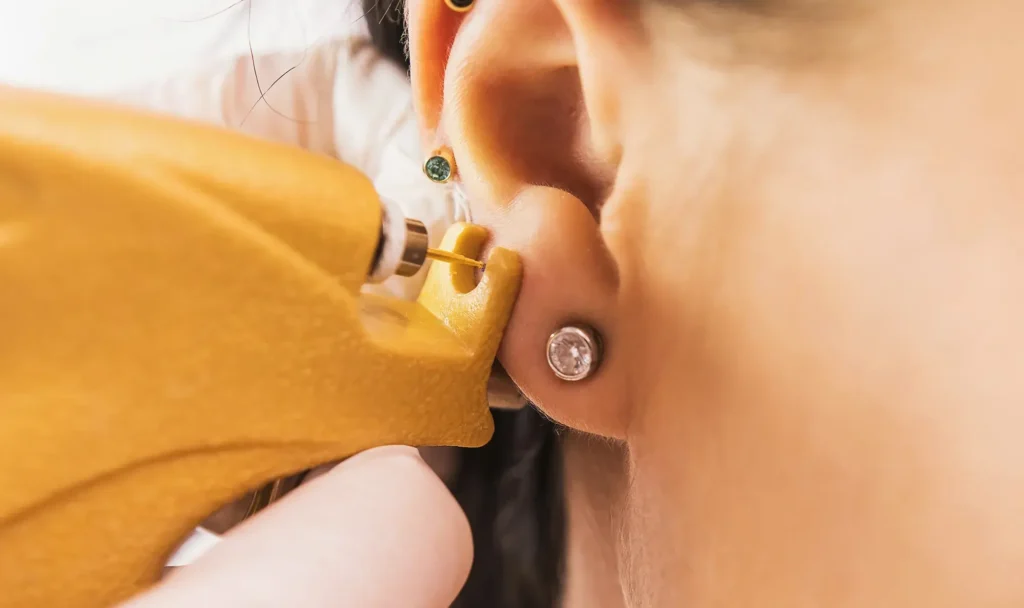
A sterile, hollow needle or piercing gun quickly creates a clean, open channel through the ear tissue (lobe or cartilage).
Jewelry Insertion
The chosen jewelry, which is typically hypoallergenic and sterilized, is immediately guided through the newly created channel.
Healing and Aftercare
The new piercing is cleaned regularly using a saline solution over several weeks or months, allowing the body to form a healed skin tunnel around the jewelry.
Success Stories
With a legacy of 10,000+ happy clients and 500+ glowing five-star reviews, Sskin Savvy Advanced Aesthetics has established itself as a leader in luxury dermatology and aesthetics. Discover why we’re the trusted choice for those seeking exceptional results.

have a question?
Quick answers to questions you may have
How long does it take for an ear piercing to heal?
The healing time varies depending on the type of piercing. Lobe piercings typically take 6 to 8 weeks, while cartilage piercings can take 3 to 12 months.
What are the risks associated with ear piercing?
The risks include infection, allergic reactions, and scarring. To minimize the risks, choose a reputable piercer and follow proper aftercare instructions.
Can I get an ear piercing if I have sensitive skin?
Yes, but it’s essential to choose high-quality, hypoallergenic jewelry and follow proper aftercare instructions to minimize the risk of allergic reactions.
How do I care for my new ear piercing?
Clean the piercing two to three times a day using a sterile saline solution or a gentle, fragrance-free soap and water. Avoid touching the piercing, and avoid swimming in pools or hot tubs.