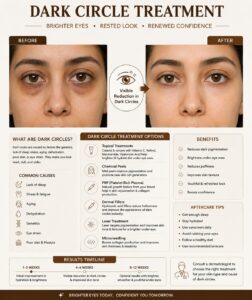
Dark circles under the eyes are a common concern in both men and women. They can make the face appear tired, dull or older even when you are well rested. More importantly, dark circles are not a single condition. Under-eye pigmentation, thin skin, visible blood vessels, allergies, genetics, ageing, tear-trough hollowness and lifestyle factors can all contribute to their appearance.
This is why the best treatment for dark circles depends on identifying the underlying cause rather than choosing one treatment for everyone.
If you are looking for dark circles treatment in Dadar, Mumbai, Dr Usha Beloskar, Board Certified Dermatologist at Sskin Savvy Advanced Aesthetics, provides dermatologist-led evaluation and personalised treatment planning for under-eye pigmentation, dark circles, skin-quality concerns and under-eye rejuvenation.
Quick Answer: What Is the Best Treatment for Dark Circles?
The best dark circles treatment depends on whether the darkness is caused mainly by pigmentation, visible blood vessels, thin skin, tear-trough hollowness, skin laxity or a combination of these factors.
Pigmented dark circles may require dermatologist-guided skincare or selected procedures for pigmentation. Structural dark circles caused by under-eye hollows require a different approach, while patients with multiple causes may benefit from combination treatment.
A dermatologist examination is therefore the first step towards choosing an appropriate treatment.
What Are Dark Circles?
Dark circles, also called periorbital dark circles or periorbital hyperpigmentation, describe darkness or shadowing around the eyes.
The under-eye area has relatively delicate skin. Changes in pigmentation, skin thickness, blood vessels and facial anatomy can therefore become particularly visible in this region.
Two patients can have very similar-looking dark circles but completely different underlying causes. This distinction matters because a pigmentation treatment will not necessarily correct a shadow caused by a deep tear trough.
What Causes Dark Circles Under the Eyes?
Dark circles are usually multifactorial. Common causes include:
- Genetics and hereditary factors
- Periorbital hyperpigmentation
- Thin under-eye skin
- Visible underlying blood vessels
- Tear-trough hollowness
- Age-related volume changes
- Loss of collagen and skin elasticity
- Sun exposure and tanning
- Allergies and frequent eye rubbing
- Post-inflammatory pigmentation
- Dehydration
- Inadequate or irregular sleep
- Smoking and other lifestyle factors
Correctly identifying these contributing factors is central to effective under-eye dark circles treatment.
What Are the Different Types of Dark Circles?
Understanding the type of dark circle is useful when deciding which treatment may be appropriate.
- Pigmented Dark Circles
Pigmented dark circles generally appear brown or dark brown.
They may be associated with increased melanin around the eyes and can be influenced by genetics, sun exposure, inflammation and repeated rubbing of the eyes.
Treatment therefore focuses on identifying the cause of pigmentation and selecting appropriate measures to reduce further pigmentation and gradually improve its appearance.
- Vascular Dark Circles
Vascular dark circles may appear blue, purple, pink or reddish.
The under-eye skin is thin, so underlying blood vessels can sometimes become more visible. Skin thickness, genetics and ageing may contribute to this appearance.
These dark circles require a different assessment from predominantly brown pigmentation.
- Structural Dark Circles and Tear-Trough Hollows
Sometimes the darkness is actually a shadow rather than pigmentation.
The tear trough is the groove extending from the inner corner of the eye towards the upper cheek. When this area becomes hollow, the resulting shadow can make the under-eye region look darker.
Tear-trough hollowness may be related to:
- Genetics
- Facial anatomy
- Ageing
- Changes in facial volume
- Bone and soft-tissue structure
Pigmentation creams alone are unlikely to adequately correct a predominantly structural shadow.
- Mixed Dark Circles
Many patients have mixed dark circles.
For example, someone may simultaneously have:
pigmentation + thin skin + visible vessels + tear-trough shadowing.
These cases may require a combination approach rather than a single treatment.
Why Do I Have Dark Circles Even After Sleeping Well?
Lack of sleep is only one factor that can make the eyes appear tired.
Persistent dark circles despite adequate sleep may be related to genetics, pigmentation, facial anatomy, thin skin, allergies, visible blood vessels or tear-trough hollowness.
Therefore, sleeping longer does not necessarily eliminate dark circles.
If your dark circles remain despite adequate sleep and appropriate skincare, a dermatologist can evaluate whether another underlying factor is responsible.
Are Dark Circles Genetic?
Yes. Genetics can play an important role in dark circles.
You may inherit a tendency towards:
- Greater pigmentation around the eyes
- Thin under-eye skin
- Prominent blood vessels
- Deep-set eyes
- Tear-trough hollowness
- Particular facial contours that create under-eye shadows
Genetic dark circles may still be improved in suitable cases, but realistic expectations are important.
Dark Circles Treatment in Dadar Mumbai: What Are the Options?
Treatment should be selected according to the type and cause of dark circles.
At Sskin Savvy Advanced Aesthetics, Dadar West, Dr Usha Beloskar evaluates the under-eye region before recommending an individualised treatment strategy.
Depending on the diagnosis, the approach may include dermatologist-prescribed skincare, pigmentation management, selected procedures, under-eye rejuvenation or combination treatment.
1.Dermatologist-Prescribed Skincare for Dark Circles
Appropriate skincare may be useful when pigmentation and skin quality contribute to dark circles.
Depending on the patient’s skin, a dermatologist may recommend ingredients intended to address:
- Pigmentation
- Hydration
- Skin barrier health
- Oxidative stress
- Photoageing
- Overall under-eye skin quality
Because under-eye skin is delicate, products suitable for other areas of the face may not necessarily be appropriate around the eyes.
Overuse of strong active ingredients can cause irritation and potentially worsen pigmentation.
- Treatment for Under-Eye Pigmentation
When periorbital hyperpigmentation is a significant component, treatment may focus on reducing excess pigmentation while preventing further darkening.
A treatment programme may involve appropriate topical therapy, rigorous photoprotection and selected dermatological procedures when indicated.
The exact approach should be chosen according to skin type and the cause and depth of pigmentation.
- Chemical Peels for Dark Circles
Selected superficial chemical peels may be considered for certain patients with under-eye pigmentation.
Because the skin surrounding the eyes is delicate, the type, concentration and application of a peel require careful selection.
Aggressive DIY peeling or unsupervised use of acids around the eyes should be avoided.
- Laser and Energy-Based Treatments for Dark Circles
Selected laser or energy-based treatments may be considered for certain types of under-eye pigmentation or skin-quality concerns.
Suitability depends on:
- Type of pigmentation
- Skin tone
- Under-eye skin quality
- Previous treatments
- Sensitivity
- Individual risk of post-inflammatory pigmentation
Treatment selection and parameters are particularly important in Indian and melanin-rich skin, where inappropriate treatment can potentially cause unwanted pigmentary changes.
- Under-Eye Rejuvenation
Ageing can lead to changes in collagen, skin thickness, elasticity and facial volume.
For appropriate patients, dermatologist-selected under-eye rejuvenation treatments may be considered to improve skin quality and create a fresher appearance.
The correct procedure depends on whether the dominant concern is pigmentation, skin quality, laxity, hollowness or a combination.
- Treatment for Tear-Trough Hollowness
If dark circles are predominantly caused by a tear-trough shadow, pigmentation treatments alone may not solve the problem.
A dermatologist can assess the relationship between the lower eyelid, tear trough and cheek to determine whether a structural treatment approach is appropriate.
The under-eye region is anatomically complex. Therefore, suitability, benefits, limitations and potential risks should be evaluated carefully before any procedure.
Dark Circles Treatment for Indian Skin
Treating dark circles in Indian skin requires careful consideration of pigmentation.
Indian and other melanin-rich skin types may be more susceptible to post-inflammatory hyperpigmentation following irritation or inappropriate procedures.
A dermatologist-led approach therefore considers:
- Skin phototype
- Existing pigmentation
- Previous reactions to treatments
- Sensitivity
- Tendency towards post-inflammatory pigmentation
- Appropriate treatment intensity
- Sun-protection habits
The objective should be gradual, controlled improvement rather than unnecessarily aggressive treatment.
Can Dark Circles Be Removed Permanently?
A common Google search is: “How can I remove dark circles permanently?”
There is no treatment that can guarantee permanent removal of every type of dark circle.
The achievable result depends on the cause.
For example, pigmentation may improve but can recur following sun exposure or inflammation. Age-related structural changes can continue over time, while genetically determined anatomy cannot always be completely altered.
A more realistic treatment goal is to identify correctable causes, improve the appearance of the under-eye area and establish measures that help maintain the improvement.
Do Home Remedies Work for Dark Circles?
Cold compresses, adequate sleep, hydration and avoiding eye rubbing may help reduce factors that accentuate a tired appearance.
However, home remedies cannot reliably correct significant periorbital pigmentation, tear-trough hollowness, visible vascularity or age-related structural changes.
Be cautious with DIY remedies involving:
- Lemon juice
- Undiluted acids
- Baking soda
- Aggressive scrubs
- Strong bleaching agents
- Unsupervised chemical peels
Irritation around the eyes can worsen pigmentation, particularly in pigmentation-prone skin.
How Can You Prevent Dark Circles From Getting Worse?
While not all dark circles can be prevented, appropriate daily care can help minimise aggravating factors.
Useful measures include:
- Use appropriate broad-spectrum sun protection.
- Wear sunglasses in strong sunlight.
- Avoid repeatedly rubbing the eyes.
- Manage allergies appropriately.
- Maintain regular sleep habits.
- Stay adequately hydrated.
- Follow a gentle skincare routine.
- Avoid aggressive exfoliation around the eyes.
- Remove eye makeup gently.
- Seek dermatological advice before using strong pigmentation treatments near the eyes.
When Should You See a Dermatologist for Dark Circles?
Consider consulting a dermatologist when:
- Dark circles are persistent.
- Pigmentation is progressively increasing.
- Over-the-counter products have not helped.
- There is significant under-eye hollowness.
- You are unsure whether the darkness is pigmentation or shadowing.
- Your skin becomes irritated after using dark-circle products.
- You are considering peels, lasers or other procedures.
- You want a personalised treatment plan rather than trial-and-error skincare.
A clinical examination can help determine what type of dark circles you actually have before money and time are spent on treatment.
Why Choose Sskin Savvy Advanced Aesthetics for Dark Circles Treatment in Dadar?
At Sskin Savvy Advanced Aesthetics, dark-circle treatment begins by determining the underlying cause rather than treating every patient with the same procedure.
Dr Usha Beloskar, Board Certified Dermatologist, assesses factors including pigmentation, skin quality, vascular visibility, tear-trough anatomy, facial structure and age-related changes before recommending an appropriate treatment plan.
The clinic is conveniently located at Kohinoor Square in Dadar West, opposite Sena Bhavan, making it accessible for patients seeking a dermatologist for dark circles in Dadar, Shivaji Park, Mahim, Matunga, Prabhadevi and surrounding areas of Mumbai.
Frequently Asked Questions About Dark Circles
What is the best treatment for dark circles?
There is no single best treatment. Pigmented, vascular and structural dark circles have different causes and may require different approaches. A dermatologist can determine which component is dominant and recommend an appropriate treatment.
Which doctor should I consult for dark circles?
A dermatologist can evaluate pigmentation, skin quality and other dermatological factors contributing to dark circles and determine whether additional aesthetic treatment is appropriate.
Why are my dark circles getting darker?
Sun exposure, eye rubbing, allergies, irritation, pigmentation, ageing and changes in under-eye anatomy can make dark circles appear more prominent.
Can a dermatologist remove dark circles?
A dermatologist can diagnose the contributing factors and recommend treatments aimed at improving them. Complete removal cannot be guaranteed because results depend on the underlying cause.
Can under-eye pigmentation be treated?
Certain forms of under-eye pigmentation can improve with appropriately selected skincare and dermatological treatments. Treatment should be tailored to the cause and skin type.
Are chemical peels good for dark circles?
Selected superficial peels may be useful for certain pigmentation patterns, but not every dark circle is caused by pigmentation. The delicate under-eye region requires careful product and patient selection.
Can laser treatment reduce dark circles?
Selected laser or energy-based procedures may be considered for certain patients. Suitability depends on the type of dark circle, skin tone and risk of pigmentary changes.
How long does dark circles treatment take?
There is no universal timeline. Treatment duration depends on the cause, severity, procedure or skincare programme used and individual response.
Can dark circles come back after treatment?
Yes. Genetics, ageing, sun exposure, allergies, recurrent eye rubbing and pigmentation can influence recurrence. Maintenance and preventive care may therefore be recommended.
Is dark circles treatment suitable for men?
Yes. Dark circles can affect all genders, and treatment is based on the underlying cause rather than gender.
Dark Circles Treatment Near Me in Dadar West, Mumbai
If you are searching for:
“dark circles treatment near me”
“best dermatologist for dark circles in Dadar”
“under eye pigmentation treatment in Mumbai”
“dark circles treatment in Dadar West”
“under eye treatment near Shivaji Park”
“dermatologist in Dadar for dark circles”
you can schedule an assessment at:
Sskin Savvy Advanced Aesthetics
Dr Usha Beloskar
Board Certified Dermatologist
📞 9821880678
📞 8960960962
📞 9930980678
📍 Kohinoor Square, Central Tower B, 403
Opp. Sena Bhavan, Dadar West, Mumbai
Website: www.sskinsavvy.com
Instagram: @dr_ushadermat
Search for Sskin Savvy Advanced Aesthetics / Dr Usha Beloskar on Google Maps for directions and clinic information.
Book a Consultation for Dark Circles Treatment in Dadar, Mumbai
Persistent dark circles should not automatically be treated as simple pigmentation.
They may result from periorbital hyperpigmentation, thin skin, visible blood vessels, tear-trough hollowness, genetics, ageing, allergies or multiple factors simultaneously.
Correct diagnosis allows treatment to target the actual cause.
For personalised dark circles treatment and under-eye rejuvenation in Dadar West, Mumbai, consult:
Dr Usha Beloskar
Board Certified Dermatologist
Sskin Savvy Advanced Aesthetics
📞 9821880678 | 8960960962 | 9930980678
📍 Kohinoor Square, Central Tower B, 403, Opp. Sena Bhavan, Dadar West, Mumbai
Website: www.sskinsavvy.com
Instagram: @dr_ushadermat